Bipartisan Legislation Could Help More Businesses Survive COVID-19
nat rosasco • September 17, 2020
MEDIANEWS GROUP VIA GETTY IMAGES
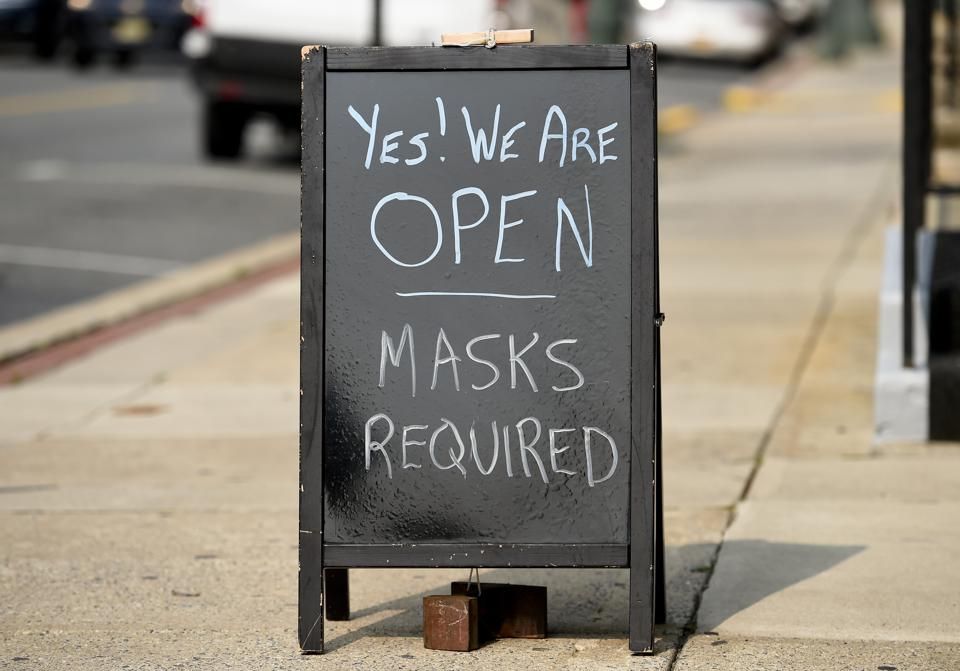
The Paycheck Protection Program (PPP) has helped many businesses weather the COVID-19 pandemic, but many have been lost along the way. A National Bureau of Economic Research survey
found that 22% of small businesses have closed because of coronavirus and women- and minority-owned businesses have been hit even harder. Many owners whose businesses are still open say they are worried about their survival if they do not receive financial support to make it through the winter months, but a bipartisan bill in the Senate could address that dilemma.
Last week, I hosted a webinar with Senator Michael Bennet [D-CO] and Starbucks Founder and Chairman Emeritus Howard Schultz on S. 3814, the Reviving the Economy Sustainably Towards A Recovery in 2020 (RESTART) Act. The legislation, sponsored by Bennet and Senator Todd Young [R-IN], extends PPP, creates new loan programs, and has 55 cosponsors in the Senate. Schultz has also led an effort that has resulted in 8,700 business owners signing a letter
in support of the bill.
“In 1987, Starbucks was a small business. I knew what it meant not to be able to make payroll. I knew what it meant to try and just do everything we possibly could, fighting passionately as young entrepreneurs to save our business,” Schultz said on the webinar. “And we didn’t have the challenge of COVID. We were just trying to make it through.”
Sen. Bennet also has a background in business. In between his stints in public service, he worked for an investment company in Denver, where he helped with the consolidation of three movie theater chains into the Regal Entertainment Group, the second-largest movie theater company in the U.S. His joint introduction of the RESTART Act with Sen. Young is based on that experience and the firsthand accounts of business owners in his state.
“I just spent the last several weeks during the August recess visiting with these business owners across Colorado,” said Bennet. “Several of these meetings ended in tears because they don’t know how they are going to pay their workers or stay in business when the winter months hit.”
The RESTART Act is designed to protect these businesses through a number of avenues. The bill extends PPP loans for 16 weeks to use the funds if the recipient has less than 500 full-time employees and has suffered at least a 25% decline in revenue. The recipient can use the loan to cover payroll costs, rent, utilities, and personal protective equipment.
“If you’re a sit-down restaurant or a gym, you’ve potentially been completely closed or operating at a limited capacity for months and you’re not going to be at full capacity for a while,” said Bennet. “The RESTART Act would give you the support to sustain your business through the end of the year and into early next year. No interest would be due in the first year and no principal would be due in the first two years, giving you the runway to get back up to full strength.”
As Sen. Bennet noted, the legislation also establishes a loan program where the Small Business Administration (SBA) guarantees 100% of loan amounts made to specific small businesses with less than 5,000 full-time employees with terms that include maximum duration of no more than seven years, a loan amount that cannot exceed 45% of 2019 gross receipts, and no principal payment requirements for the first two years of the loan. If the loan is equal to or more than the amount of the business's total loss for the taxable year of 2020, then it will be forgiven. In addition, lenders that have already been approved to make PPP loans will be able to administer loans established by this bill.
“In order to try and describe to members [of Congress] what we are dealing with, I have used the expression that small businesses in America need an economic bridge to the vaccine,” said Schultz. “Small businesses need financial support to transform and sustain themselves, so they can navigate this unprecedented moment.”
If the bill is not passed on a stand-alone basis, it could still be included in a larger COVID-19 relief package. That approach and/or additional legislative efforts for small businesses with these types of elements would achieve Sens. Bennet’s and Young’s, and Schultz’s goal.
“My objective is not to pass RESTART. My objective is to help save America’s small businesses,” said Bennet. “I think RESTART is the best bipartisan idea we have, but we’re always open to improve it.”
Whether the RESTART Act or another legislation package is the solution, one thing is certain: many small business owners are still struggling because of COVID-19 and will need help getting to the other side of this pandemic.
This piece originally appeared in Forbes on September 17, 2020. You can view it online here.
Rhett Buttle is the founder of Public Private Strategies, Executive Director of the Small Business Roundtable, Founder of the NextGen Chamber of Commerce, a Senior Fellow at The Aspen Institute, and a contributor for Forbes.